
Entertainment
Super 30 Founder Anand Kumar Flags Risks in Nandan Nilekani’s AI Plan to Prevent NEET Paper Leaks

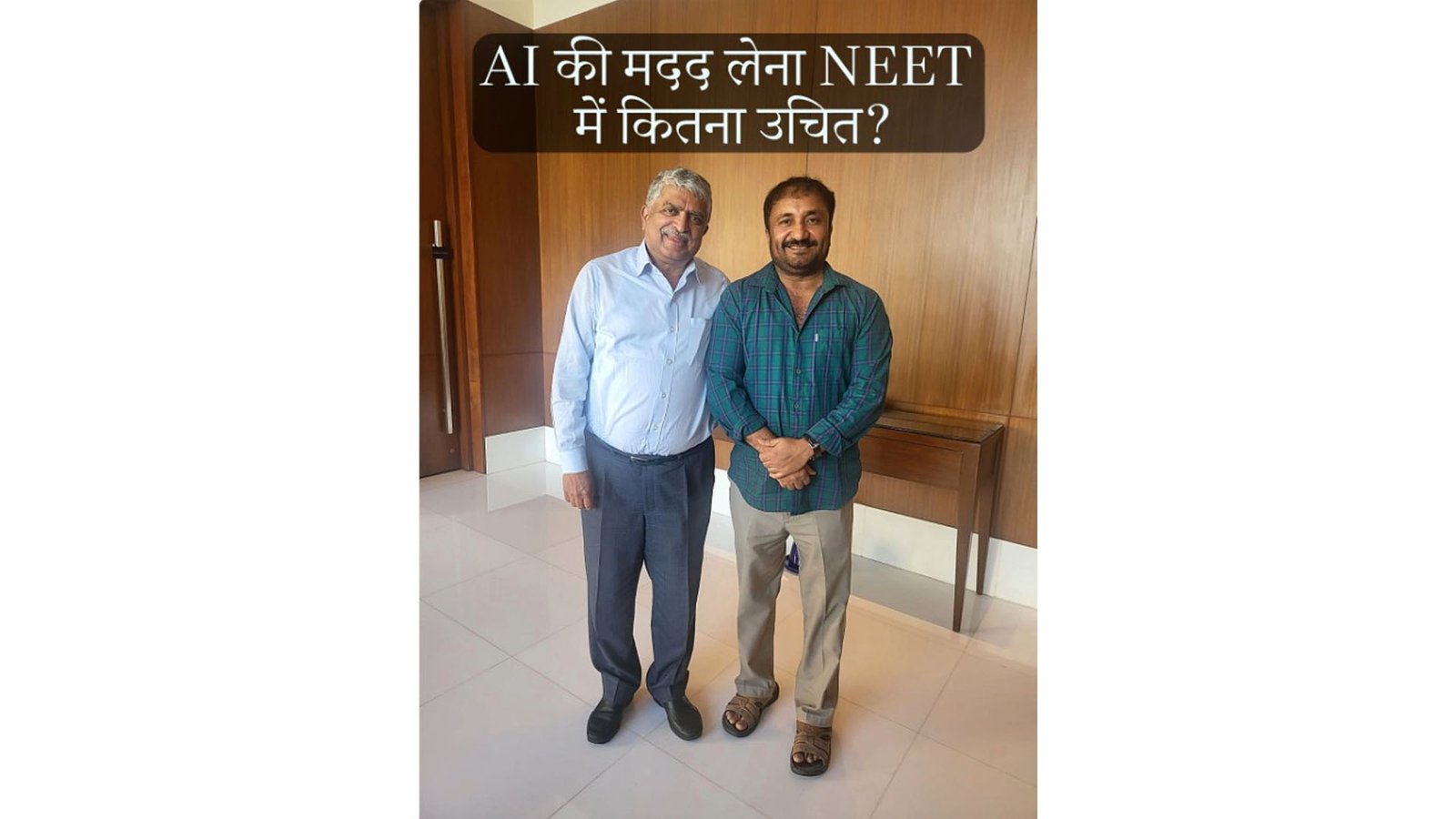
Anand Kumar, founder of Super 30, the educational initiative known for helping talented students from economically disadvantaged backgrounds prepare for IIT entrance examinations, has raised concerns over Nandan Nilekani’s proposal to use AI to prevent paper leaks in competitive examinations such as NEET. Kumar, whose inspiring journey was portrayed by Hrithik Roshan in the film Super 30, believes that while technology can strengthen the education system, its implementation must not compromise accessibility and fairness for students across the country.
Respectfully disagreeing with Nilekani’s suggestion of generating question papers at the last minute using AI and a large question bank, Kumar has highlighted three key concerns: limited access to computers among students from rural and economically weaker backgrounds, disparities in infrastructure and security at examination centres, and the possibility of errors in AI-selected questions. He believes that introducing a computer-based examination system without addressing these challenges could create additional hurdles for deserving students.
Sharing his perspective, Kumar said, “Shri Nandan Nilekani ji is someone I hold in the highest regard. I have been fortunate that he praised me and my efforts through Super 30 in his renowned book, Imagining India: The Idea of a Renewed Nation. I have always had deep respect for him. However, I respectfully disagree with his recent suggestion of using AI at the last minute to prevent paper leaks in examinations like NEET. There are three important reasons behind my disagreement. First, preventing paper leaks is extremely important, but how appropriate would it be to make the entire examination system computer-based for this purpose? Even today, millions of talented children from remote villages and economically disadvantaged families across our country do not have adequate access to computers. We must ensure that, in our efforts to prevent cheating, we do not end up creating a new barrier for these children. Second, even if test centres are established in remote areas, will the facilities and security available there be comparable to those at centres in metropolitan cities? Third, it is quite common for errors to be discovered in questions prepared for various examinations almost every year, even when the number of questions is relatively small. Now, if a question bank containing thousands of questions is created, from which AI selects questions at the last minute, what guarantee is there that all the questions will be accurate and free of errors? I am not opposed to technology or AI. On the contrary, I believe AI can bring revolutionary changes to the field of education. It can also assist experts in preparing question papers. However, there is a significant difference between providing assistance and making the final decision. Based on my experience of working with students over several decades and my understanding of the possibilities of AI, I would like to emphasize one thing: To prevent paper leaks, we must address the weaknesses in the existing system rather than create a new system that makes opportunities even more difficult to access for poor but talented children. The real purpose of an examination is not to demonstrate the power of technology, but to identify the talent hidden in every corner of our country. We must never forget that the cost of a single mistake is not merely a few marks; it could mean the loss of a child’s entire dream.”
Anand Kumar’s remarks underline the need to strengthen examination security without creating further inequalities in access to education. While AI could assist experts in preparing question papers, he believes that ensuring accuracy, maintaining uniform examination standards, and protecting equal opportunities for students must remain central to any proposed reform.
