
Entertainment
Neha Rana on the Truth Hidden Behind the Wedding in COLORS’ ‘Mahadev & Sons’

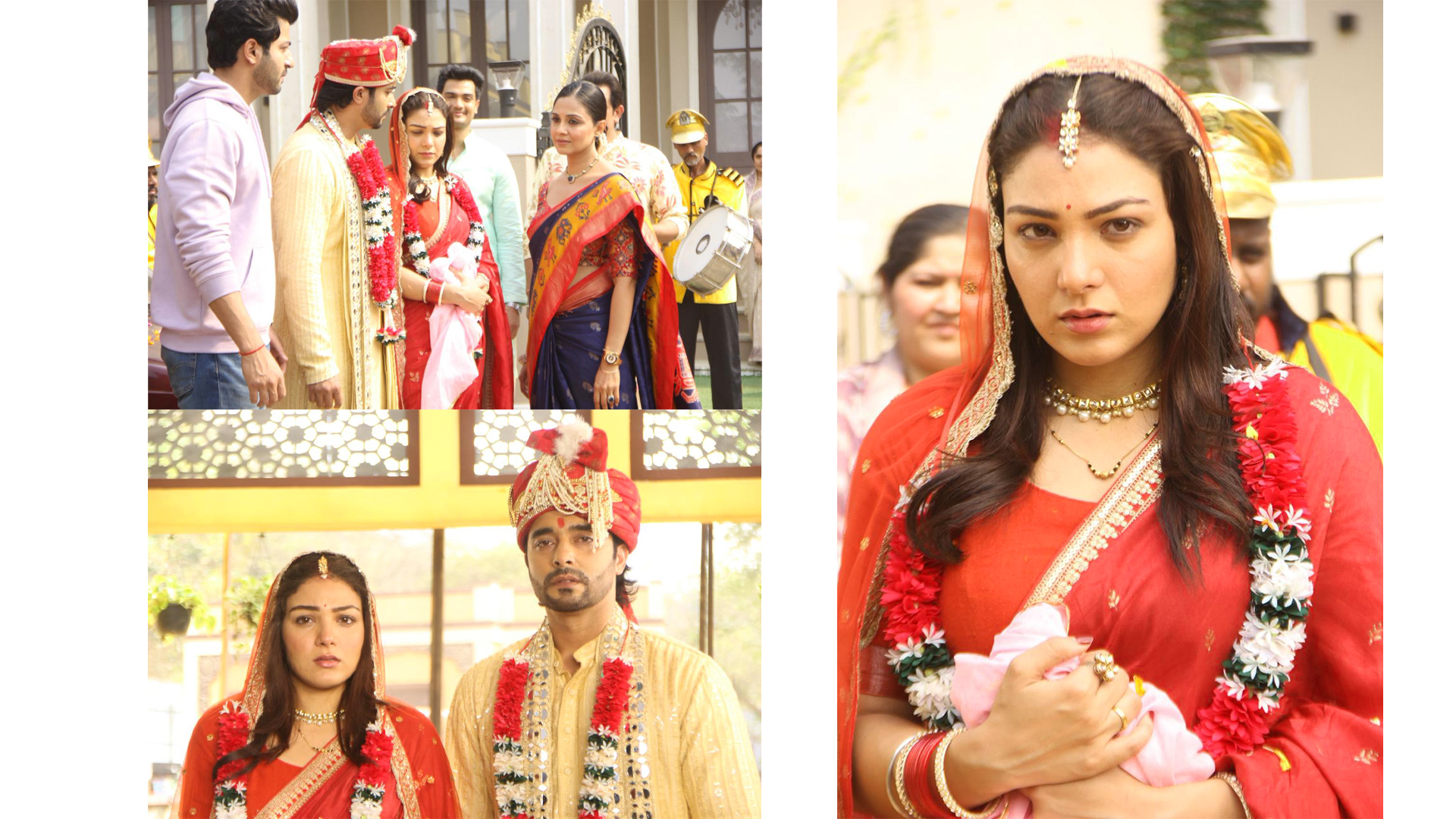
COLORS’ ‘Mahadev & Sons’ has steadily built its bond with audiences by reflecting family dynamics and value-driven relationships that feel rooted and real. The current track zeroes in on Narmada and Ketan’s wedding, a celebration marked by hesitation and unspoken tension as love enters a household shaped by long-held beliefs. As rituals unfold and emotions run high in front of the mandap, the marriage becomes less about festivity and more about the quiet conflict between personal choice and tradition. Opening up about navigating this phase on screen, Neha Rana (Narmada) shares her experience of portraying a bride whose happiness is underscored by fear, silence, and resistance.
1. Your character’s wedding has become one of the most talked about tracks on the show. What was your first reaction when you heard about it?*
A. Honestly, I was excited and a little nervous at the same time. A wedding track is always special, but this one carries so much emotional weight and full of challenges. This wedding isn’t just about celebration, it changes the emotional balance of the entire family. I knew it wouldn’t just be about beautiful visuals, it was about relationships, traditions, and inner conflicts as we were going against our parents and getting married. I felt grateful that the makers trusted me with such an important phase of the story. What makes this wedding different is that happiness and tension exist together in the house, and that feeling stays with Narmada throughout the track. As an actor, it made me very aware that this is not just a personal moment for her, but a turning point that affects every equation in the family.
2. What was the most challenging scene for you to perform during this wedding sequence?*
A. Marriage is a huge moment in India, and being a bride carries so many emotions with it — excitement, nervousness, hope, and a certain vulnerability. Weddings in India come with expectations of constant happiness, and playing a bride means showing that joy even when emotions are far more complicated. As an actor, you always hope to capture that flutter, that mix of anticipation that comes with stepping into such a life-changing phase. The rewarding challenge for me was to hold on to that bridal energy while also showing what Narmada is going through internally. She is part of the celebrations, performing rituals and smiling for everyone, but at the same time, she’s aware that her marriage is being questioned because of the family’s values. Playing that balance, where joy is visible on the surface but uncertainty and restraint sit quietly underneath, especially in moments where she wants to speak up but chooses silence, was emotionally the most demanding part of this track for me.
3. How did you prepare to bring both glamour and drama to this track as a bride?*
A. Preparation was both internal and external. Of course, the styling, costumes, and jewellery helped with the glamour, but the drama came from understanding my character’s emotional journey. The real work was not looking like a bride, but feeling like one who doesn’t know what acceptance will look like tomorrow. The pressure of smiling through pain is a reality for so many brides. I spent time thinking about what she’s gaining, what she’s leaving behind, and what she’s scared of. In this wedding track, Narmada is stepping into a new life without knowing how much acceptance she will receive, and that uncertainty stays with her even during the happiest moments. Holding on to that emotional truth helped me keep the performance grounded.
4. In today’s age of nuclear families, what would you keep in mind while marrying into a traditional household like Mahadev’s?*
A. I think the biggest thing today is learning how to coexist with differences instead of trying to change each other immediately. Many families today are traditional in values but modern in reality, and navigating that gap isn’t easy for anyone. In nuclear families, decisions are often individual, but in traditional households, choices are shared and shaped by years of belief and experience. Traditions are beautiful, but individuality matters too, and finding that balance takes time. Joint families come with both challenges and blessings. The challenge is that you’re not just adjusting to one person, but to an entire ecosystem. Your choices are seen, discussed, and sometimes questioned. That can feel overwhelming, especially for women. But the perk is that you’re never alone. There’s emotional support, shared responsibility, and a sense of belonging that’s rare today. Mahadev & Sons shows both sides honestly. It acknowledges that tradition can coexist with change.
5. Finally, what message would you like to give your fans?*
A. I just want to say thank you from the bottom of my heart for all the love, support, and patience you’ve shown us. You truly make every long shoot day worth it. While the title focuses on Mahadev and his sons, the women drive the emotional and moral compass of the story. Vidya (Sneha Wagh) stands up fiercely for her love and her family. Bhanu (Manasi Salvi) represents the voice of tradition, but even that comes from lived experience and concern, not control. And Narmada stands at the crossroads – trying to honour love without losing herself. Going forward, viewers can expect the story to explore emotions and relationships even more deeply, as every character is pushed to make difficult choices. The coming episodes focus on how love, responsibility, and family bonds are tested in quiet but powerful ways. I hope audiences continue to stay connected with the journey and keep showing us your support
Watch ‘Mahadev & Sons’ airing every Monday to Friday at 9:30 PM only on COLORS.


