
Bollywood
“Ajit’s life is the kind of story the publishing world waited too long to hear”: Bestselling Author Ashwin Sanghi on Newcomer Ajit Kumar’s Remarkable Writing Journey at JLF 2026

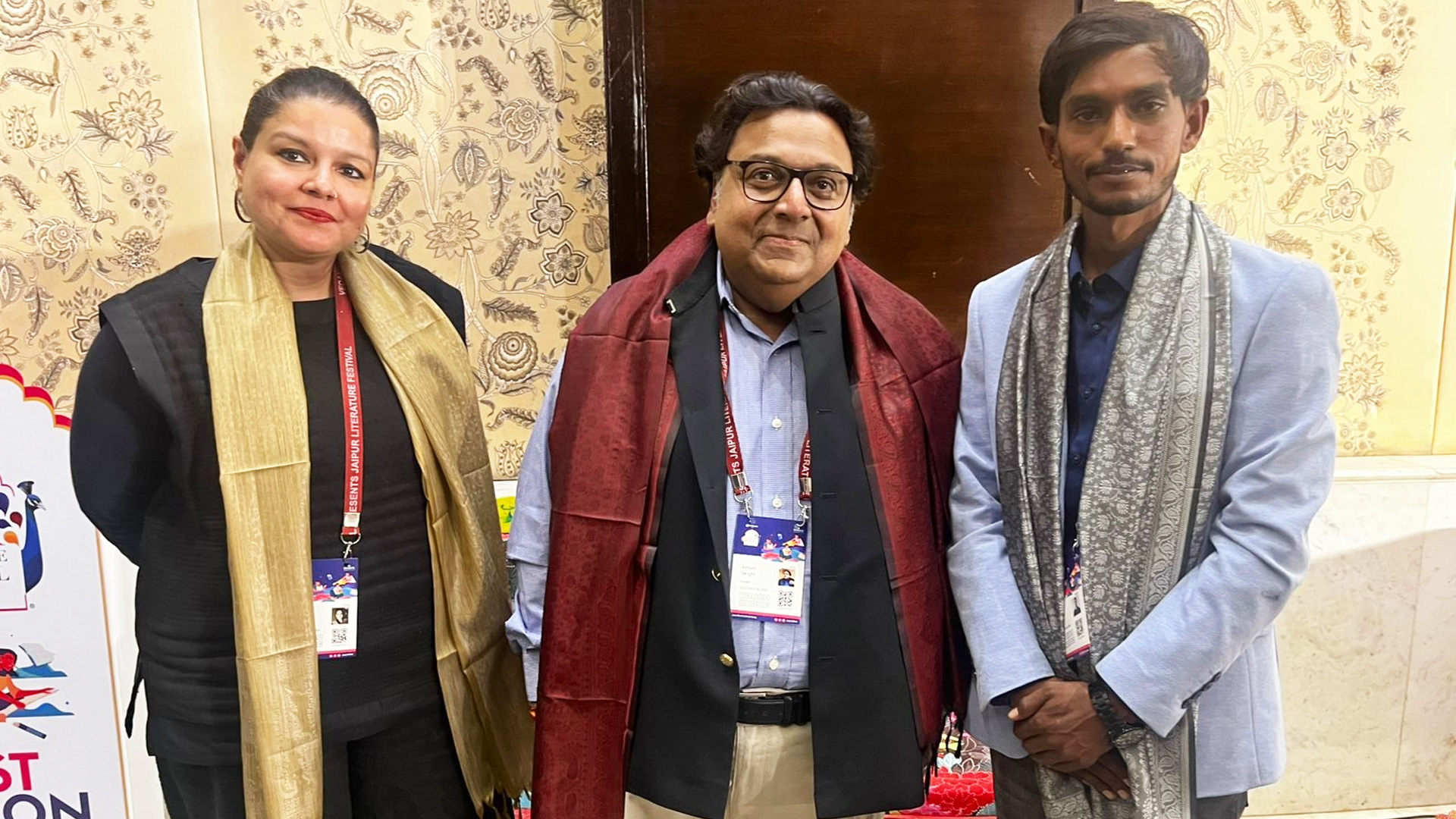
At a time when literary success is being redefined beyond book deals and bestseller lists, the session “Beaten off the Page” at the Jaipur Literature Festival 2026 offered a compelling meditation on courage, reinvention, and democratic storytelling.
Moderated by Swati Chopra, Publisher, Hachette India, the conversation brought together bestselling author Ashwin Sanghi and breakout audio storyteller Ajit Kumar, whose journeys into storytelling could not have been more different, yet converged on the same question: who gets to decide how a writer succeeds?
From Survival to Storytelling
Opening the conversation, Swati Chopra invited Ajit Kumar to trace his journey into writing. Ajit spoke about growing up in a small village in Uttar Pradesh, dropping out of medical studies due to financial pressure, and taking up food delivery work to support his family. He used to work 16-18 hours daily to earn his living.
Two serious accidents left him immobilised for seven months, and brought those moments that forced him to confront the fragility of physical labour as a livelihood. It was during recovery that he discovered the power of storytelling through audio series platform Pocket FM, realising that stories could be written for listeners too, and not just readers.
Ajit described teaching himself how to write for audio, replacing visual cues with emotion, rhythm, and sensory detail. That learning curve led to the creation of Brahmayoddha – The Destroyer, a mytho-fantasy audio series on Pocket FM that has since crossed 40 million plays, making him among the top storytellers on the platform.
Luck, Effort, and the Things You Can’t Time
Picking up on the theme of unconventional journeys, Ashwin Sanghi reflected on his own early years of navigating rejection within the publishing industry. He spoke about spending over two years searching for a publisher, self-publishing his first novel, and physically placing his own books on bestseller shelves in bookstores.
An audience question toward the end of the session brought the conversation to luck versus hard work, a theme that resonated deeply with both speakers. Sanghi shared an anecdote that drew both laughter and recognition. Recalling advice from a family friend during his years of rejection, he shared: “Life, he was told, is 99% luck, and the remaining 1% is bloody good luck”
The catch, Sanghi noted, is that “bloody good luck has no timing.” It can arrive early, late, or disguised as failure. Drawing a connection Sanghi offered a stark observation on how adversity often becomes the catalyst for reinvention, and said, “Surprisingly and ironically, Ajit’s bloody good luck was an accident because had he not been in bed, fractured, I doubt whether he would have felt the need to go down that road. Sometimes what we think is bad luck is actually good luck playing itself out.”
An audience question toward the end of the session brought the conversation to luck versus hard work, a theme that resonated deeply with both speakers.
Writing Without the Page
As the session progressed, Swati Chopra steered the discussion toward the changing nature of readership and attention. The panel addressed how writers today compete with multiple forms of digital distractions.
Ajit explained that audio storytelling demands heightened precision, every emotion, movement, and action must be carried through words alone. Sanghi added that contemporary writers must adapt structure and pacing to meet readers where they are, rather than blaming shrinking attention spans.
Both agreed that storytelling is not diminishing, but transforming, moving fluidly across formats and making storytelling democratic while retaining its emotional core.
Defining Success on One’s Own Terms
The session concluded with a discussion on independence and self-definition. For Ajit, success meant writing his way out of personal crisis and building a loyal audience without institutional validation. For Sanghi, it meant enduring rejection long enough to reach readers directly.
As the conversation closed, it became clear that “Beaten off the Page” was all about expanding the idea of storytelling beyond traditional formats, beyond gatekeepers, and beyond inherited definitions of achievement.
